
The Smart Way to Farm Real Estate
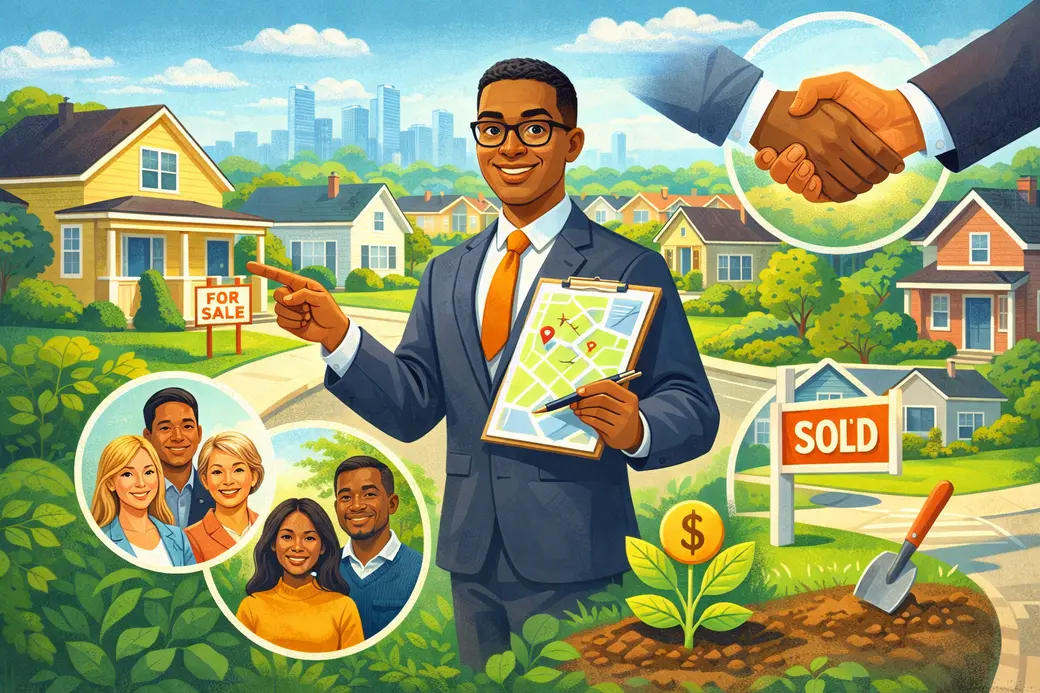
Every real estate agent has heard the phrase “farm a neighborhood.” The concept sounds simple enough: pick an area, send some mailers, and eventually the listings will come.
In reality, most agents approach geographic farming the wrong way. They scatter postcards, hope for recognition, and move on when results do not appear quickly. What they miss is this: farming is not about marketing to a neighborhood — it is about becoming part of it.
The agents who dominate neighborhoods are not simply visible. They are trusted, recognizable, and consistently present in ways that make homeowners feel comfortable calling them when the time to move arrives.
When done strategically, neighborhood farming becomes one of the most powerful long-term lead generation strategies in real estate.
What Geographic Farming Really Means
At its core, geographic farming is the practice of focusing your marketing, presence, and expertise on a specific neighborhood so consistently that residents begin to associate you with real estate in that area.
Think of it this way.
When someone in the neighborhood says,
"Who’s the agent around here?"
Your name should be the one that surfaces naturally.
That level of recognition does not happen overnight. It is built through consistency, visibility, and genuine community engagement.
Step One: Choose the Right Neighborhood
One of the biggest mistakes agents make is choosing a neighborhood randomly. A smart farming strategy begins with careful selection.
Look for an area that has the right balance of activity and opportunity.
A neighborhood with 150 to 500 homes is often ideal. Smaller areas make it easier to build familiarity without overwhelming your marketing budget.
Also consider factors like turnover rate, home values, and proximity to where you live or work.
Action Step
Research 3–5 neighborhoods and evaluate:
- Number of homes
- Average home price
- Annual turnover rate
- Existing agent dominance
- Distance from your base
If one agent already controls the majority of listings in that neighborhood, it may require a longer strategy to break through.
Step Two: Become the Local Market Expert
Before you start marketing to a neighborhood, you should know it better than anyone else.
Understand the pricing trends.
Study past sales.
Learn the history of the community.
When you speak about the neighborhood, it should feel natural and informed.
Homeowners trust agents who clearly understand the value of their specific street, subdivision, or property type.
Action Step
Create a simple neighborhood research file that includes:
- Average sale prices
- Average days on market
- Price trends over the last 12 months
- Number of active listings
- Unique selling points of the area
This information becomes the foundation for your marketing and conversations.
Step Three: Show Up Consistently
Visibility is the currency of geographic farming.
Most agents send one or two mailers and disappear. That inconsistency prevents recognition from forming.
Residents should see your name repeatedly in ways that feel helpful rather than promotional.
Examples include:
- Market update postcards
- Neighborhood newsletters
- Just sold updates
- Local business spotlights
- Community event announcements
The goal is to create familiarity over time.
People trust what they recognize.
Action Step
Commit to one consistent monthly touchpoint with the neighborhood for at least 12 months.
Consistency matters far more than volume.
Step Four: Become Part of the Community
The smartest agents understand something powerful.
Real estate is not just about property — it is about people and community.
Agents who dominate neighborhoods often show up in ways that have nothing to do with asking for business.
They attend local events.
They support neighborhood initiatives.
They collaborate with local businesses.
Over time, residents begin to see them as a familiar face rather than a salesperson.
Action Step
Identify two ways to participate locally.
For example:
- Sponsor a neighborhood event
- Host a seasonal homeowner workshop
- Create a neighborhood Facebook group
- Spotlight local businesses in your marketing
Small gestures create meaningful connections.
Step Five: Educate Instead of Advertise
Homeowners are constantly exposed to advertising. What they respond to far more positively is education.
Instead of saying, “List with me,” provide insights that help them understand their market.
Examples include:
- “What homes in our neighborhood sold for this month”
- “Three things affecting home prices in our area”
- “How to increase your home’s value before selling”
When you consistently provide useful information, homeowners begin to view you as a trusted advisor rather than a marketer.
Action Step
Start a simple monthly Neighborhood Market Snapshot that includes:
- Recent sales
- Active listings
- Average price trends
- One homeowner tip
This positions you as the neighborhood authority.
Step Six: Think Long Term
Geographic farming rewards patience.
Many agents expect immediate results and abandon their efforts too soon. In reality, successful farming strategies often take six to eighteen months to gain traction.
However, once recognition builds, the results can compound.
Listings begin appearing.
Referrals increase.
Your presence becomes established.
The key is persistence.
Action Step
Set a 12-month commitment to your farming strategy.
Track your activities each month and review progress quarterly.
Consistency creates momentum.
The Long Game of Neighborhood Dominance
The most successful real estate agents rarely rely on chance.
They build systems that position them exactly where opportunity will appear.
Geographic farming is one of those systems.
When you consistently educate, contribute to the community, and remain visible, something remarkable happens: homeowners begin to feel as though they already know you.
And when the day arrives that someone on their street decides to sell, they are not searching for an agent.
They are calling the one they already trust.
If you approach neighborhood farming with patience, strategy, and genuine connection, you will not simply market to a community.
You will become the real estate professional that community depends on.
Recent Posts







GET MORE INFORMATION

Lola Animashaun
Agent License ID: TN: 354527 KY: 278964
Agent License ID: TN: 354527 KY: 278964